
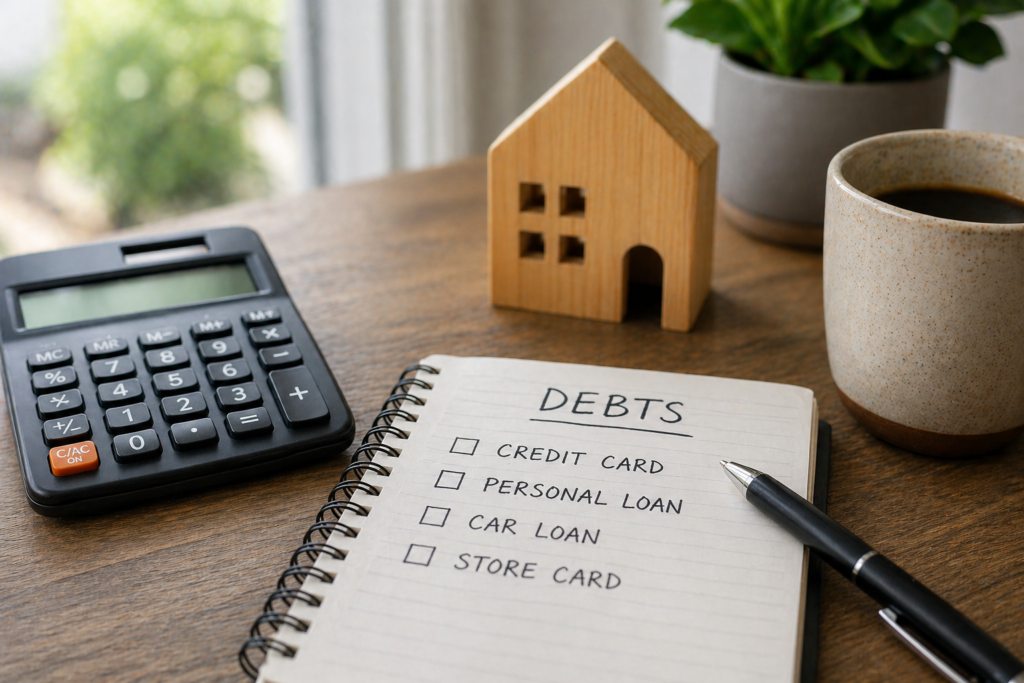
If you’re juggling multiple debts—credit cards, personal loans, car finance—it can feel like you’re constantly treading water. High interest rates and multiple repayments make it harder to get ahead.
One strategy many Australians are turning to is debt consolidation through refinancing their home loan. But is it the right move for you?
Let’s break it down.
What Is Debt Consolidation?
Debt consolidation means combining multiple debts into one single loan, ideally with a lower interest rate and more manageable repayments.
When done through refinancing, you:
- Replace your current home loan with a new one
- Increase the loan amount to pay out existing debts
- Roll everything into one mortgage repayment
Why Use Your Home Loan to Consolidate Debt?
Home loans typically have much lower interest rates compared to:
- Credit cards (often 18–22%)
- Personal loans (usually 8–15%)
- Car loans
By refinancing, you could:
✔ Reduce your overall interest rate
✔ Lower your monthly repayments
✔ Simplify your finances (one repayment instead of many)
Example Scenario
Let’s say you have:
- $15,000 credit card at 20%
- $10,000 personal loan at 12%
- $8,000 car loan at 9%
That’s $33,000 in debt, costing you a significant amount in interest.
By refinancing your home loan and consolidating:
- You may reduce the interest rate to ~6%
- Lower your total monthly repayments
- Free up cash flow
The Benefits
1. Lower Interest Costs
This is the biggest advantage. Moving high-interest debt into a lower-rate home loan can save thousands over time.
2. Improved Cash Flow
Lower monthly repayments can ease financial stress and give you breathing room.
3. Simplicity
One repayment = less admin, fewer due dates, and reduced risk of missed payments.
4. Potential Credit Score Improvement
Paying off multiple debts can improve your credit profile (if managed correctly).
The Risks (This Is Important)
Debt consolidation isn’t a magic fix—it needs discipline.
1. Longer Loan Term = More Interest Over Time
Even with a lower rate, stretching debt over 20–30 years could mean paying more interest overall.
2. Turning Unsecured Debt into Secured Debt
Credit cards are unsecured. Your home loan is secured against your property—meaning your home is now tied to that debt.
3. Risk of Re-Accumulating Debt
If spending habits don’t change, you could:
- Clear your credit cards
- Then rack them up again
This is the biggest trap.
When Does It Make Sense?
Debt consolidation through refinancing can be a smart move if:
✔ You’re committed to not reusing cleared debts
✔ You need to reduce financial pressure short-term
✔ You’re struggling with high interest repayments
✔ You have sufficient equity in your property
✔ You want a structured plan to become debt-free
When It Might NOT Be the Best Option
⚠ If your debts are small and manageable
⚠ If you’re likely to keep using credit cards
⚠ If refinancing costs outweigh the benefits
⚠ If your home equity is limited
Smart Strategies to Make It Work
If you go down this path, do it properly:
- Close or reduce limits on credit cards
- Stick to a budget
- Consider keeping the same repayment amount to pay off debt faster
- Work with a broker to structure your loan correctly (split loans, offsets, etc.)
Final Thoughts
Debt consolidation through refinancing can be a powerful tool—but only when used strategically.
It’s not just about lowering repayments. It’s about:
👉 Taking control of your finances
👉 Reducing stress
👉 Creating a clear path forward
Need Help Deciding?
Every situation is different. The right structure can make a huge difference—not just now, but long-term.
If you’re thinking about consolidating debt, it’s worth getting tailored advice to make sure it actually works in your favour. Click here for personalised advice